
© DR
HISTORY, IN STORIES
A matter of resonance
POSTED ON 13.10.2026
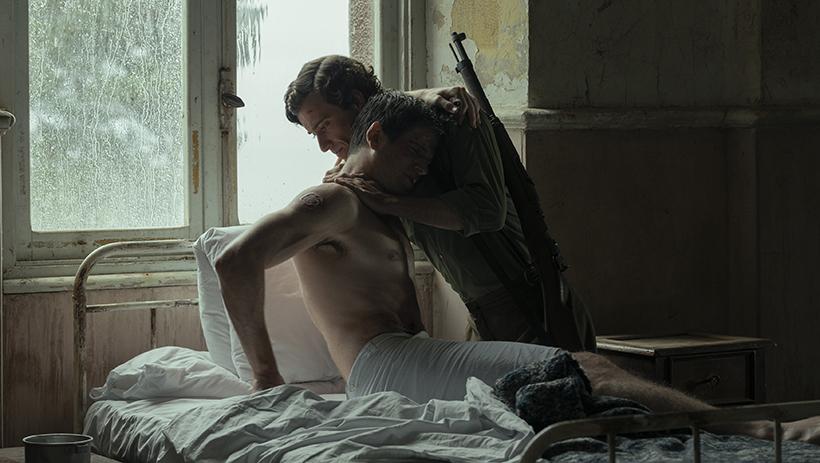
A trio of films premiering at Lumière, The Black Ball and Moulin, plus an œuvre of heritage cinema, Days of Hope, all tackle the same subject: the Resistance!
There is nothing better than a heritage film festival to fully appreciate the significance of each film and observe how they complement one another within a common theme. Recounting History, but from different temporal perspectives, allows us to activate our memory, considering the framework of “reaction time” (the time taken to make a film as events unfold) or “contemplation time” (the time taken to create a work, decades later). Days of Hope by André Malraux, whose death 50 years ago we are about to commemorate at Lumière, was filmed in 1938 in Spain, at the very height of the fighting between the Republican forces and Franco’s army! The Black Ball by Javier Ambrossi and Javier Calvo, about the Spanish Civil War, and Moulin by László Nemes, about WWII, were made in 2026. These represent two ways of engaging with history as we’ve just mentioned, one in the heat of the moment, the other with the benefit of hindsight and a sense of legacy. The duty to immediately remember, which flows like fresh blood, combined with the obligation to remember decades later, are two ways of combating oblivion. Screening them at the same festival demonstrates the very value of cinema!
This trio of works depict the context of war and the dynamics between the social classes, where the working class, the bourgeoisie, artists, peasants and laborers… come together in a shared story of humanity. Around them, classic rituals of solidarity and camaraderie take shape: “Friend, if you fall, a friend will step out of the shadows to take your place…” goes the 1943 Partisan Song, the anthem of the Resistance, which the fighters in Malraux’s work, those in The Black Ball and Moulin could all adopt as their own. Each one grapples with the same political concepts: the reasons for their engagement, loyalty, friendship and even love. Men who are strangers become closer than brothers, even if only for a fleeting moment. They express their choices and opinions as if confessing before the group of soldiers during moments of calm.
These works develop their own language of movement. We learn to handle a weapon out of necessity, to speak in hushed tones, to follow orders to the letter; orders that are delivered with care, because we know the price of danger and how precious time is. So we live in the present, celebrate at every possible moment: we sing, we dance, we rejoice. The body tells the whole story of war. The wounded, tortured body, becoming a corpse, is what is at stake in these conflcits. Death is meted out like executions, in a brutal, literary manner; stark lyricism in Malraux’s work, driven by the real battles waged at the time; and a fierce lyricism, pushing to the point of self-sacrifice, in Moulin and The Black Ball. This triptych of œuvres convey one message: Man must rise to greatness when in the face of certain circumstances.
“What can we do for the dead?” asks a man in Days of Hope. “Be grateful to them,” is the response. As each film reflects, in its own way, on events from the more or less recent past, they exemplify how cinema strives to fight against oblivion, serving as reminders of the realities of war that are, alas, timeless.
Virginie Apiou