
© The Essanay Film Manufacturing Company
FILM CONCERT
A Musician in the Shadows!
POSTED ON 11.10.2026
Didier Martel, a pianist, organist, programmer and composer, performs the musical accompaniment for silent film-concert events at Lumière!
How do you prepare for a silent film performance?
I started playing film concerts in 2018. It was a revelation. I was familiar with Charlie Chaplin and the classic slapstick comedians, but at Lumière I discovered great silent films, such as Murnau’s Sunrise. A film concert involves giving yourself to improvisation. There are several levels of preparation, first the pianist’s daily practice of scales and arpeggios. What makes improvisation unique is that it’s a test of endurance. You have to be able to play fast enough and for long enough and express on the piano the passages with different key changes, such as the cataclysmic final act of Metropolis. It’s physically demanding. To improvise well, you need to practice playing without a score, which doesn’t mean playing by heart. You get into the habit of using a classical repertoire as a foundation; a Chopin piece, for instance, completely modifying its form. You transform the waltz into a tango or ragtime. I’m not inventing anything new, but I express myself through my own sensitivity. When I do this improvisation exercise, I also strive to add a touch of showmanship to my playing. It’s an integral part of the performance I have to deliver. I’m both a behind-the-scenes musician and a performer!
What are the specific challenges of performing musical accompaniment for Charlie Chaplin’s films? For example, how do you follow the physical impulses of his body, given that the Tramp never stays immobile and is also very agile?
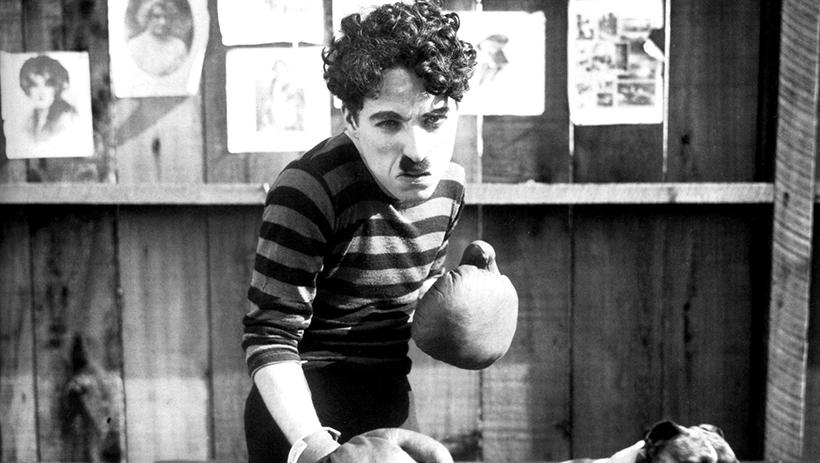
Chaplin represents timeless elegance, even when he’s playing the fool. I’d read about his approach to music. He didn’t want his gags to be dubbed with sound effects. The three films featured in one of the film-concerts are very different. The Boxer is very energetic and lively; the pace doesn’t decrease for thirty minutes. The music itself carries his movement. The Floorwalker is more elegant, more inventive, with a commentary on the progress of consumer society. The Vagabond shows a much more romantic, touching side of the Tramp. Chaplin is devastating with his disarming smile, and he’s a great inspiration for a musician.
How does the sonority of the piano suit Chaplin?
Simply speaking, because Chaplin may have played the piano and the violin. He composed great melodies on the piano, including the one from City Lights. Then he would pass them on to arrangers, who would create symphonic versions of them. The piano is the instrument that’s often nearby. It’s accessible to everyone. You can play anything on it.
Could you say a few words about the silent film concert of The Madonna of the Sleeping Cars by Marco de Gastyne and Maurice Gleize ?
What struck me was the beauty of the images, the set design and the attention to detail of the film’s cinematography on a sensory level. For the musical accompaniment, I drew inspiration from the Roaring Twenties for something a bit lighthearted and extravagant, followed by something much darker and more Soviet-inspired for the conspiracy aspect. It’s a pretty long film, running 2 hours and 38 minutes. I prepare the starting points for improvisation and add some basic measures, then develop them during the screening. It requires a lot of concentration and physical stamina.
Interview by Virginie Apiou