
© Collection Christophel
OPENING FILM
A Special Day
POSTED ON 10.10.2026
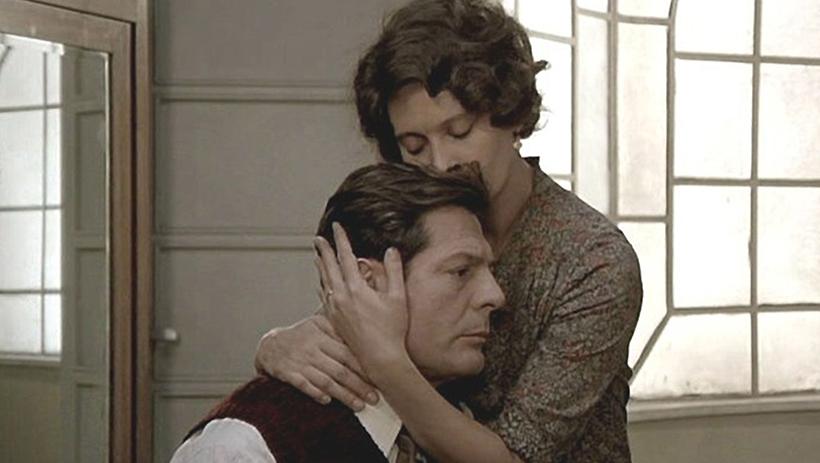
A Special Day, Ettore Scola’s most famous film, nearly on par with We All Loved Each Other So Much (1974), is a poignant social drama set in prewar fascist Italy. It depicts a moment suspended in time of two lonely souls who meet and commiserate, played by the incomparable pair Sophia Loren and Marcello Mastroianni.
It is May 8, 1938. All of Rome jubilantly rushes to the streets for the parade in honor of the visit of Hitler, welcomed by Mussolini amid great popular fervor. Antonietta (Sophia Loren), an unhappy housewife and mother, has remained at home to tend to her chores. She becomes acquainted with her neighbor (Marcello Mastroianni), who has been fired from his job due to his homosexuality. (We realize the dual nature of the title, a historical vs intimate special day). The story, penned by Scola himself, the case with all his œuvres, is logical, given that he was a screenwriter before becoming a director. Here, he works alongside co-writers Ruggero Maccari and Maurizio Costanzo. As a result, the dialogues are wonderfully crafted and brimming with ingenuity. A memorable line, capturing the absurdity of the situation at the time, and indicative of the socially conscious aspect of Scola’s work: “I don’t think the tenant on the sixth floor is opposed to fascism. Rather, it’s fascism that’s opposed to the tenant on the sixth floor.”
In this suffocating, closed setting, two lost souls find each other by chance... These isolated characters feature outstanding performances by Sophia Loren and Marcello Mastroianni. (The duo, hardly unfamiliar with one another, will end up making fourteen films together)… The Italian stars, universally viewed as sex symbols, take on roles that are completely against type, as the incessant military marches and blaring radio chatter about the ongoing parade continue in the background, a jarring reminder of reality.
A Special Day could be adapted to the current state of the world. Ettore Scola, employing his subtle yet daring style, infused with a feminist perspective, was even ahead of his time. The Italian filmmaker experienced that fanfare parade firsthand as a child, leading him to eventually examine the individual’s place in History, denouncing a society that embraces the notion that every man must be “either a husband, a father or a soldier.” He emphatically stresses the vital importance of liberty–the film’s overriding theme–symbolized by Antonietta’s bird escaping from its cage. Freedom is furthermore expressed by a simple physical reaction, both a symbol of joy and a formidable means of resistance: laughter.
Fanny Bellocq