
© Warner Bros. - Morgan Creek Productions / DR
IN THE SPOTLIGHT
Caleb Deschanel, a life of lumière
POSTED ON 15.10.2026
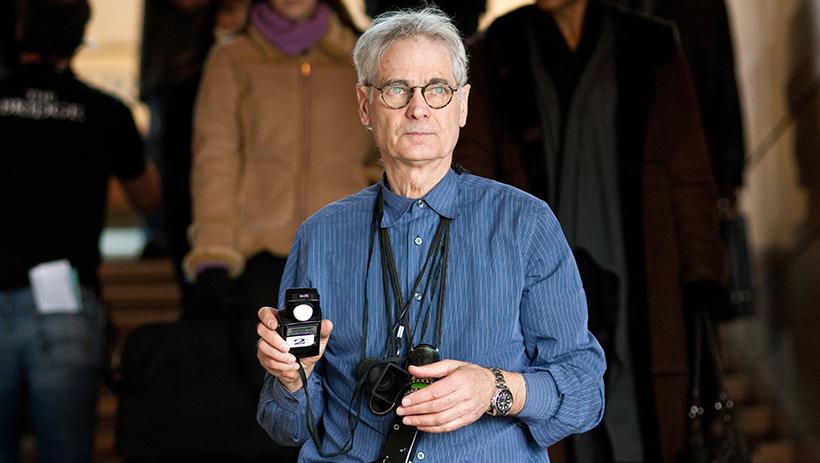
“You have to lose yourself in a facial expression–it’s so powerful!” exclaims Caleb Deschanel. Discussing what he enjoys most while lighting and enhancing his work, he cites the face. This renowned cinematographer, a five-time Academy-Award nominated artist, continues to create with the same passion as when he began in 1979…
Caleb Deschanel was born in 1944 in Philadelphia, Pennsylvania. His father, a Frenchman from Oullins in the metropolitan area of Lyon (!), emigrates to the United States in 1930. Deschanel majors in cinema at the University of California, graduating in 1968, before studying at the American Film Institute. Almost immediately, as early as 1969, he is hired on the film crews of directors known for their films’ distinctive lighting: Terrence Malick, George Lucas, John Cassavetes and Francis Ford Coppola. Working with the latter, he collaborates with legendary DPs Gordon Willis and Vittorio Storaro. Deschanel goes on to serve as cinematographer for energetic director Hal Ashby, as well as for William Friedkin, David Lynch (three episodes of Twin Peaks), Christopher McQuarrie, Warren Beatty and others…
His work swiftly gains recognition, earning him a first Oscar nod in 1983 for Phili Kaufman’s The Right Stuff, along with other films. A year earlier he had made his directorial debut with The Escape Artist, followed by Crusoe in 1988. In 1984, he joins the American Society of Cinematographers (A.S.C.), co-founding Dark Light Pictures a decade later, his production company and studio specializing in cinema and television creation.
One of Deschanel’s major influences is painting. As a child, he sketches his own flip books. He studies art history at school and spends his time visiting museums to discover the greats, paying close attention to how the artists use light, contrasts and chiaroscuro, whether on a face or in a landscape. He also becomes interested in the composition of painting, claiming it holds the key to how different emotions are conceived and reflect nuance. Deschanel will employ his talents for the original and controversial film, The Passion of the Christ (2002) by Mel Gibson. For this œuvre, Deschanel delves back into religious painting (although not exclusively). For Gibson’s film, a harsh and unflinching portrait of Jesus’s agony, the cinematographer carries out extensive research and draws inspiration from Caravaggio’s blood-red hues, tinged with brown, smudged with dust and sweat. The marks on the skin, the body and the visible wounds in the Italian master’s paintings provide him with a certain insight. He seeks not to reproduce them, but to create his own interpretation using light… Also drawing on the work of European painters Géricault and Raphael, Deschanel crafts the antithesis of a glamorous Hollywood production.
In 2026, he takes on a new challenge: stop-motion animation. DP on Travis Knight’s Wildwood, he describes this collaboration in the world of 2D animation as a true journey. “It means reinventing everything I’d learned over the years!” Like assembling a giant mosaic, “you have to fit the pieces together, according to color.” That, perhaps, is the Deschanel style: letting yourself be guided by color, and so by light.
Virginie Apiou