
© DR
INTERVIEW
Classic Film Market
POSTED ON 13.10.2026
Gérald Duchaussoy, co-director of the International Classic Film Market (MIFC), introduces this year’s guest of honour at the MIFC: GREECE!
Why is Greece designated as the guest of honor this year?
We wanted to celebrate the cinematographic heritage of Greece. The country has launched a major 2026–2030 initiative for its audiovisual sector, including film, along with its preservation and restoration. The Lumière film festival, within the framework of the MIFC, provided an opportunity to give an international boost to this project to promote Greek heritage cinema during the period of the 1950s and 1960s, considered its golden age.
Who will be speaking at the MIFC, and in what capacity?
Representatives from EKKOMED (the equivalent of the CNC in France) and from the Greek Film Archive. There is an institutional aspect to this launch; the MIFC seeks to bring together all Greek film professionals to share our heritage film ecosystem with them.
How was Bitter Bread selected for screening at the MIFC?
When a country is in the spotlight at the MIFC, there is a discussion–in this case with EKKOMED–during which they put forward film proposals, and we review them. We then communicate which film has the strongest commercial potential. Bitter Bread is a major work of Greek cinema, perhaps one of the best known and most accessible, and the most likely to attract buyers at the Market.
What is the policy on the preservation of Greek films?
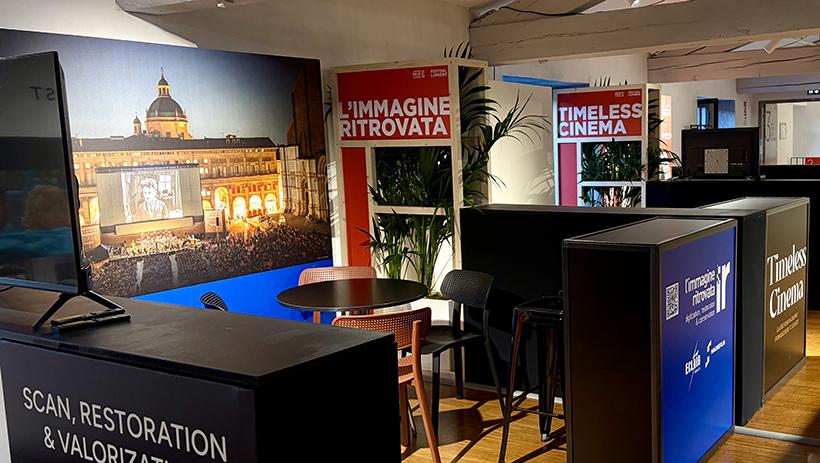
It’s just getting underway. The film archive is the driving force and is spearheading a restoration movement but with limited resources. It has worked extensively with L’Immagine Ritrovata laboratory and has thus been able to restore a few major works, but we can take it much further.
What is the nature of the collaboration between the MIFC and Greece?
It involves keeping an open dialogue with EKKOMED, and the fact that we have seven Greek films screened at the festival. We are probably Europe’s largest heritage film festival in terms of attendance, so it gives them real visibility. They‘ll then be able to engage with national authorities and the European Union, demonstrating that there is a genuine, concerted effort to promote heritage cinema. And on our side, it allows us to put forward films that we’d like to see rediscovered. In Europe, there’s a great deal of work to be done on our heritage, which is just waiting to be rereleased worldwide, given that at the MIFC we have buyers from the USA, Japan and this year, even Australia!
— -Interview by Virginie Apiou