
© Romane Reigneaud - Jean Luc Mège Photography - Institut Lumière
MUSIC
« In order to write, I need to live »
POSTED ON 15.10.2026
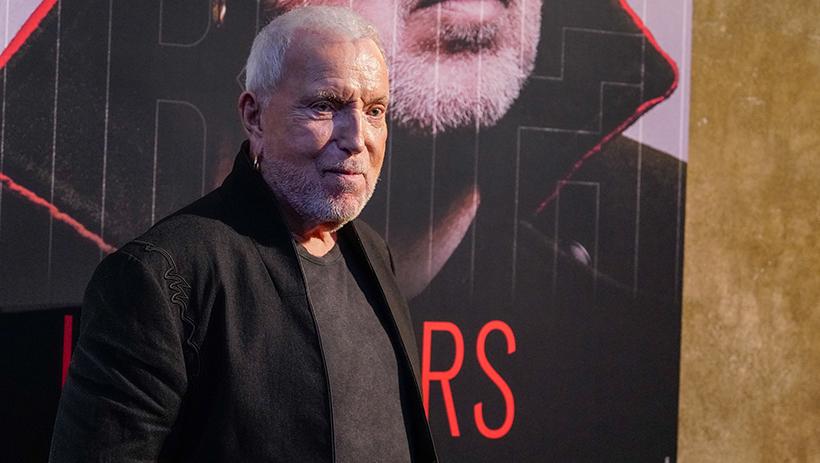
Bernard Lavilliers came to Lumière to talk about his songs, his journeys and the release of his new album, Rite Cruel, on October 23.
At 80, describing his voice as “like before, only better,” the artist from Saint-Étienne expresses an undiminished curiosity, a constant appetite for risk and a steadfast, unwavering skepticism regarding the illusions of today. “I’m an optimist by experience, a pessimist by nature.” That seems to sum up Bernard Lavilliers succinctly. It’s out of the question for him to “recycle the same songs” or to rely on his own memories as a commercial asset. “To write, I have to live.” Hence the travelling, the encounters and the need to once again seek out sounds and stories elsewhere. In Kinshasa, where he lived for a month, he set out to explore the roots of Congolese rumba, discovered thirty years prior when crossing the river from Brazzaville. He wanted to see the city by day, “to understand this megacity of 22 million people,” and to immerse himself in its artistic vitality... Mission accomplished. “I came back and said to myself, “Well, you’re not done for, you still have more in you.’”
He recorded with local musicians, shared the stage with a renown rumba guitarist and did a rendition of “Noir et Blanc,” whose Lingala chorus, once made famous by his friend Nzulu , remains in people’s minds and hearts. Rumba has its secrets. ‘If you don’t start from the music you love or at least know how to play it properly, I don’t see the point in travelling. Music must speak to you even before thinking about the lyrics.”
Brazil inspired him to write “Rio no inverno,” an original portrait of a city shrouded in mist, deprived of its usual light. “All sunny cities, as soon as there’s more sunshine, they become ugly.” The statement is provocative, but the point is a serious one: it’s about capturing a place “in a way that goes beyond the clichés, listening to how the climate, the seasons and everyday life affect people”.
In Rite Cruel, Lavilliers also revisits his own repertoire. ”La zone,” originally from his album Les Barbares (1975), has become “De la grâce à la chute”. With its film-score-like qualities, the track is inspired by Lalo Schifrin and his iconic compositions for Mission: Impossible. It’s a way of reinventing a song rather than simply reproducing it.
The era of over-consumption drove him to write “À vendre”. “Everything is for sale. Even us, we’re also for sale. Otherwise, when it’s free, we’re the product and we know that.” Behind the simplicity of the phrase lies a resentment against the omnipresent over-commodification and those who will stop at nothing. “I’m constantly having doubts… Otherwise, you end up like Donald Trump!” Does Lavilliers fear algorithms? “I fear corruption more,” he quips. “The artist,” he continues, “is a watchman, sometimes a mirror, a warning signal.”
To those who ask him how he manages to carry on, Lavilliers essentially replies with his process: start from scratch, listen, doubt, and start again. And prove to himself, as he had just stated, “that this is not over.” Then he picks up his guitar to play “On the Road Again”: something of a life motto, still perfectly intact.
Carlos Gomez