
© MK Productions, CG CinemaB
HUMAN NATURE
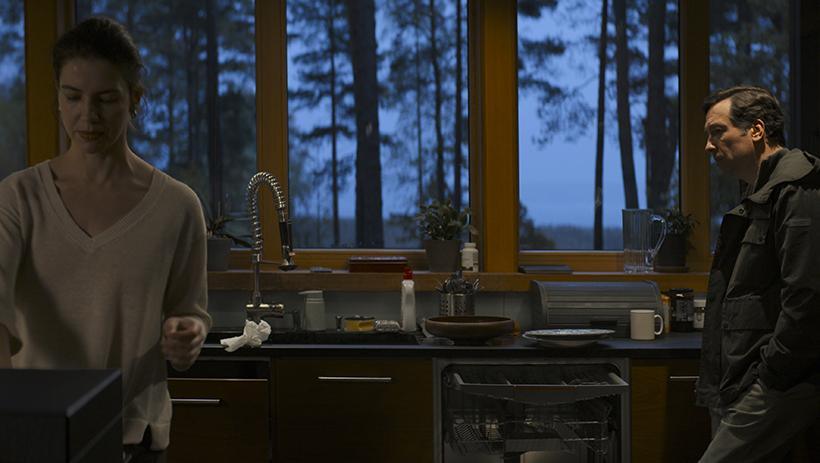
Minotaur by Andreï Zviaguintsev
POSTED ON 11.10.2026
“Human nature does not depend on political ideologies.”
A Russian filmmaker renowned for exploring eternal bonds between human beings, the great Andrey Zvyagintsev is at the Lumière film festival to introduce Minotaur, his latest feature, whose fate is directly tied to classic cinema.
You have recreated the narrative structure of Claude Chabrol’s The Unfaithful Wife to relate a story about present-day Russia in your film Minotaur. Why did you decide to do so?
This film by Claude Chabrol, where the audience observes the protagonist who is tracking his wife, was the perfect embodiment of what cinematic language represents. This contemplation is the very essence of cinema.
Lumière is a heritage film festival. Do you often watch classic films?
In fact, sometimes I do rewatch old films. Usually, it’s really just because I enjoy them. But there’s one notable exception: The Unfaithful Wife. In 2017–2018, I had several screenplays on my desk, but each one was more expensive to make than the last, and I knew it would be difficult for producers to obtain the necessary funding. So I told myself that maybe I should watch older films to either find new inspiration or perhaps direct remakes of them. At that point, I asked my friend Joel Chapron to put together a list of notable French films from the 1960s and 1970s. He made a list of 10 to 15 films for me and I watched them all. I decided on The Unfaithful Wife.
There are several shot-by-shot tributes you pay to Claude Chabrol.
Yes. I recreated certain scenes just as Chabrol had shot them. Let me give you an example: Chabrol opens his story with a scene in which the wife and her mother-in-law are looking at photos. I needed that scene and I placed it much later in my film. I also paid homage to one of my favorite directors, a sort of god of 1960s cinema: Michelangelo Antonioni. There’s a segment I adapted from La Notte, a moment where Jeanne Moreau is walking through Rome and sees teenagers playing with firecrackers. Finally, there’s a second reference to an Antonioni film, The Eclipse, in which Monica Vitti stares at empty flagpoles swaying, clanging in the wind. I shot two scenes as a tribute to these two Antonioni moments, and curiously, neither of them made it into my film.
Whether it’s Chabrol, Antonioni or Minotaur, we are dealing with a universally critical vision of the world.
Yes, it’s undoubtedly universal, because human nature, as it is, doesn’t depend on political regimes. For me, human nature obviously knows no borders, regardless of political ideology–totalitarian, democratic, libertarian or anarchist–human nature remains the same. In the end, it isn’t really influenced that much by politics. You experience the same emotions pretty much everywhere in the world, such as jealousy, envy, hatred and love… whether you’re in Iran, North Korea, or elsewhere.
Interview by Virginie Apiou