
MIFC-ENCOUNTER
Paolo Moretti
POSTED ON 14.10.2026
Paolo Moretti, Head of the Film Department at the Lausanne Cantonal School of Art (ECAL), Director of the Cinémas du Grütli, Programming Director and Head of the Prada Foundation Cinema Fund is the MIFC’s guest of honor.
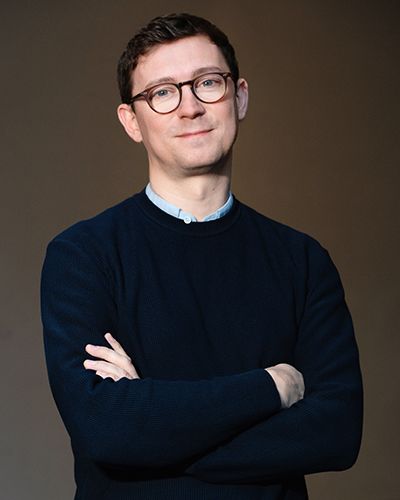
Photo P. Moretti © Angèle Marignac - Serra ECAL
What do your many roles have in common?
The key word for my three activities is “research.” It’s a perpetual evolution. In all three roles I hold, there’s a genuine commitment to constantly reflecting on how to support the evolution of cinema and education related to the moving image. And ultimately, there’s an ideal path in the sense that we’re training the next generation of filmmakers and new film industry professionals to distribute and screen their films in cinemas. We’re active in everything from training to distribution.
Why is it important to preserve and showcase heritage cinema?
All forms of cinema are important; everything can form part of a research project. With the students at ECAL, we place great emphasis on history so that they can position themselves as artists. It is important to know where we come from to better understand where we are going. Without an awareness of the heritage cinema that came before us, it is highly unlikely that a future director will be able to go very far. A film is not a passing trend; it becomes part of our cultural heritage.
What has heritage cinema meant to you?
That’s where it all began for me. I grew up as a film buff of works that were twenty, thirty, forty years older than me. They literally changed my life; they left a lasting impression on me–both the great classics and the lesser-known ones. And they continue to exert their power of fascination. They ignite the imagination from one generation to the next. The filmmakers who made them could never have imagined to what extent they are inspirational. I saw Jean Eustache’s The Mother and the Whore at a very young age. I didn’t think a film like that could exist. It still fascinates me today. And I’m also captivated by the transcendent œuvre of Werner Herzog.
How are you finding meeting professionals of the MIFC and the audiences in Lyon?
First of all, I’m truly honored by this invitation. It will be a pleasure to discuss this idea of research and reflection on heritage cinema. I’d like to share how we’ve doubled attendance at the Grütli cinemas, going from 49,000 to 100,000 in just a few years, achieved by screening all genres of films, both contemporary and classics. I particularly admire the Lumière film festival for its ability to successfully breathe new life into heritage cinema with such remarkable results. That’s extremely important. Attending the festival will also give me the opportunity to discuss with others and think up new strategies to ensure that restored films become increasingly accessible in theaters everywhere.
Which work do you dream of restoring?
Die Klage der Kaiserin, the one and only film by choreographer Pina Bausch, shot on location in Wuppertal. It’s an incredibly powerful œuvre that I discovered in rather unlikely circumstances, via a half-destroyed video print!
Interview by Virginie Apiou