
© Léa Rener - Institut Lumière
MIFC
The heritage of Taiwanese cinema!
POSTED ON 15.10.2026
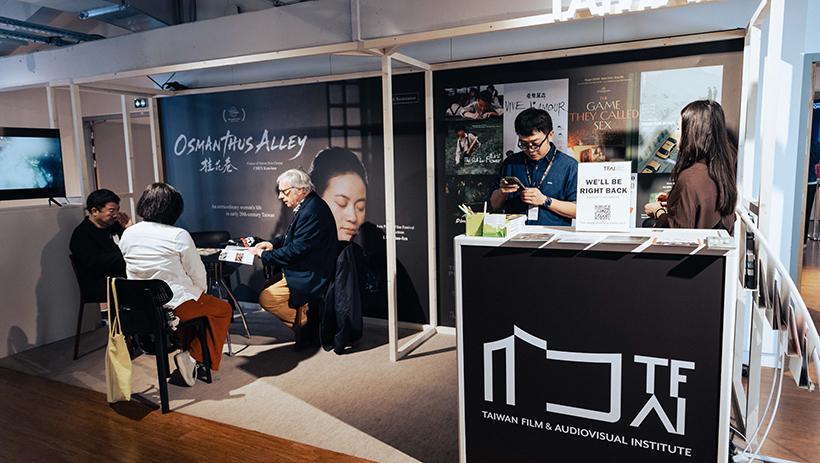
Established in 1978 and renamed in 1989, the Taiwan Film and Audiovisual Institute (TFAI) is doing its utmost to preserve its culture. Its President, Arthur Chu, is at the MIFC to showcase the cinema of his country.
What are the missions of the TFAI?
By restoring and digitizing Taiwan’s film heritage, we preserve the spirit and identity of its past, namely the island’s social, economic and cultural life. We make our film heritage accessible to the public. The year 2026 marks the 70th anniversary of cinema in the Taiwanese language. Between 1960 and 1981, 1,200 films in Taiyupian (the language of Taiwan) were produced. The TFAI has managed to save 200 of them.
What does it mean to preserve your language?
It means retaining the sonority of Taiyupian, its everyday expressions, its customs and its popular culture, and there’s no better way to achieve this than though images and sound. Making these films accessible, safeguarding our fragile heritage and sharing it with the public means showing new generations where they came from and giving them a chance to learn about their past.
Why is attending the Lumière film festival important?
It’s a great opportunity to showcase our cinema to an international audience. There was the golden age of our films, as well as literary adaptations and our New Wave. The festival also allows us to highlight our current work in restoring and bringing our films back into the spotlight. And we have the opportunity to meet foreign distributors, film archive directors and representatives from other institutions. We hope this will spread awareness of our cinema and help us export it.
In what way is Chen Kun-hou’s Osmanthus Alley (1987) a pivotal film?
It’s a good example to introduce our cinema. First, because of its connection between Taiwanese literature concerning the daily lives of Taiwanese people and the art of film. Secondly, due to its language and cultural heritage. At that time, the government required films to be dubbed in Mandarin, but not this one. This film is ultimately the product of a significant period of transformation in our cinematographic landscape. Made in the 1980s, it’s part of the New Taiwanese Cinema movement, when filmmakers were seeking greater realism to portray the truth of everyday life and the faces of that era.
What are your upcoming restoration projects?
We restore between 10 and 12 films a year, including the work of Yao Feng-pan, one of the masters of Taiwanese ghost films, such as All in the Dim Cold Night. We’ll be presenting this project as part of the Re-Birth program in Lyon to showcase the rich nature of our country’s genre cinema.
What aspect of your cinema is best suited for international distribution?
First of all, cinema is one of the most powerful vehicles for sharing a culture and a people with the world. It carries more than just stories; it embodies an entire collective memory. Presenting our films to an international audience means sharing our life experiences across time. That’s why restoration is just one step; we want our films to travel and spark conversations and exchanges about our cultural heritage.
Virginie Apiou