
© DR
TREASURES & CURIOSITIES
The House of the Angel
POSTED ON 12.10.2026
In 1920, Ana's teenage years are marred by a wheeler-dealer father and a mother obsessed with prudishness.
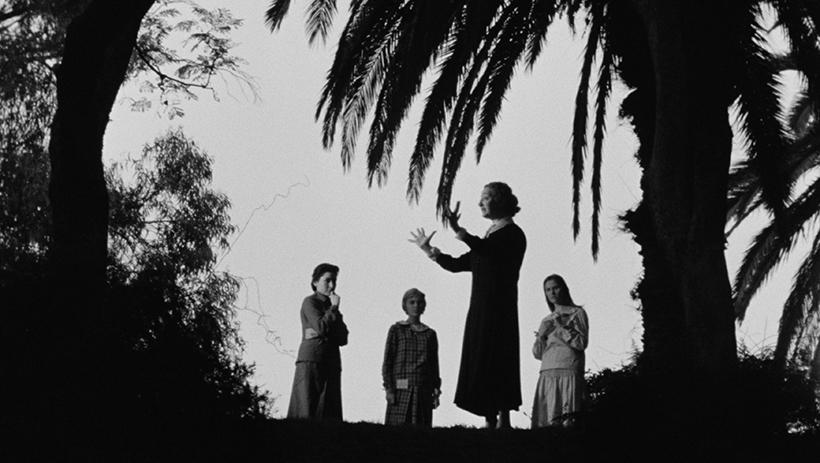
A deputy and friend of the patriarch, young and quite dashing, infiltrates the household… This Argentinian drama distinguishes itself thanks to its fantastical visual style, which mirrors the young female protagonist's suppressed vitality. The imagery is composed entirely of wispy shadows of gray and white. It leaves a constant, hazy trail, creating a mist whose contours are never fully defined. This lends the film a strange, poetic, fairy-tale-like quality and it gives this œuvre (selected in competition at the 1957 Cannes Film Festival) its eerie nature. In fairy tales, there is always danger lurking around the corner, and with every step the young girl takes, it increases her vulnerability… But life goes on, so she has no choice but to forge ahead without holding back. Leopoldo Torre Nilsson manifests this through highly original framing: extreme close-ups of a forehead or shots from beneath faces in the throes of ecstatic delirium. The House of the Angel is magnificent exactly for its odd, dizzying quality; everything around Ana seems a bit off kilter. The rotten society drives everyone mad. Power serves no purpose other than to corrupt, and the body, especially female, is the ultimate quest. Amid all this, Ana can’t help but be exhilarated by this headiness, this carnal and romantic passion, which she mistakes for happiness. And she fails to foresee the devastating influence of the surrounding bourgeoisie… In perpetual motion, The House of the Angel is a treasure just waiting to be discovered!
Virginie Apiou