
© Huayi Brothers Media / DR
MASTER
Tsui Hark, Chinese Legend
POSTED ON 10.10.2026
“I wanted to try to bring some of that screen magic I felt so strongly in my childhood to an audience…”
Tsui Hark’s cinema is a fireworks display, an explosion of colors, images and characters. No being is immobile; everyone is in constant transformation, whether they’re a mythical warrior or a fiery young woman. The spirit of Tsui Hark’s cinema is a kaleidoscope full of joy, comedy, drama, combat and battle–all at once! “His mind is like a video game,” explains Sylvia Chang, one of the actresses in Shanghai Blues. At the heart of the game lies the history of China, with its legends, its tales, its culture and its multifaceted society. Tsui Hark is insistent on showcasing all this richness to make sure it does not vanish.
Screenwriter, producer and filmmaker, Tsui Hark was born in Vietnam in 1951 in a Chinese family. He later moves to Hong Kong, China, and at age ten, he rents an 8mm camera to make his own little films based on comic-book style drawings. In 1975, he studies in the United States and works on Christine Choy’s From Spikes to Spindles (1976), a documentary about the history of Chinatown in New York. When he returns home in 1977, the Hong Kong New Wave has begun, and Tsui Hark will become one of its emblematic figures!
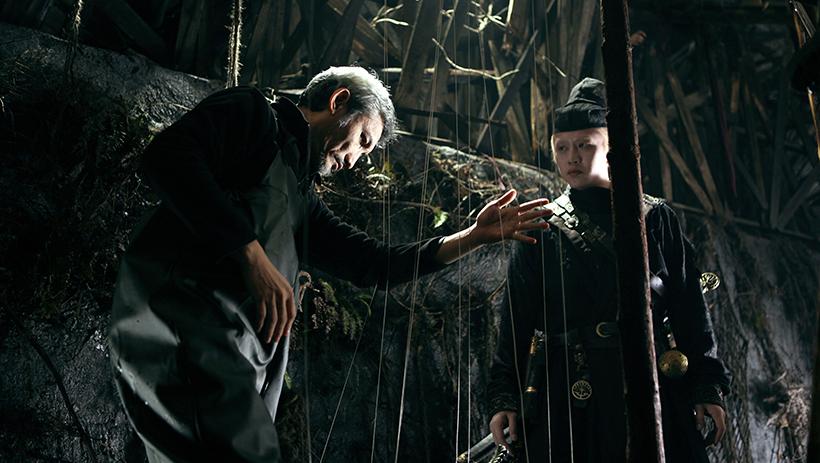
The Butterfly Murders is his directorial début, the first of nearly fifty films made between 1979 and 2025. His prolific œuvre is overflowing with hybrid works that combine various genres: wuxia (martial arts), fantasy, historical, horror, romance and musical comedy... Additionally, the plethora of special effects–a hallmark of his work–enables his heroes to leap higher, ghosts to materialize out of thin air and the extraordinary to burst forth, thereby further cementing legendary stories of mythical Chinese warriors. An example is Zu: Warriors from the Magic Mountain (1983), which is met with both popular and critical acclaim. Tsui Hark is also fascinated by the contemporary, where his use of slow motion and asymmetrical framing works wonders. He is the creative force behind the subversive and rightly disturbing thriller Dangerous Encounters of the First Kind (1980), a portrait of three young delinquent individuals in Hong Kong still under British rule, or the undercover crime flick Time and Tide (2000), which features one of the most muted nocturnal battle scenes ever shot… simply phenomenal.
The filmmaker also delivers blockbusters developed into astounding, wildly successful franchises. The Once Upon a Time in China canon and the remarkable Detective Dee series unquestionably demonstrate his love for his country’s culture, further revealing his ever-evolving creative mastery. Driven by a thousand ideas a minute, the director fills his pictures with as many female protagonists as male characters, if not more. Peking Opera Blues (1986), for instance, is carried by two women, one of whom cross-dresses to better attain her objective.
“I try to avoid looking back too much, because there’s so much to do in the future,” Tsui Hark tells a reporter. His master class with the audience in Lyon will provide a prime opportunity to ask him about the films he still wants to make!
Virginie Apiou