

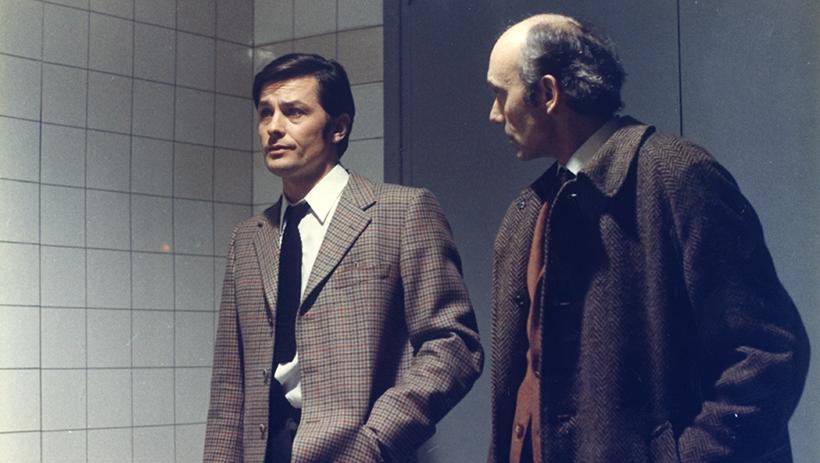
© DR
SPOTLIGHT
A Cop
POSTED ON 18.10.2026
“The only feelings a man has ever been able to inspire in a police officer are ambivalence and contempt…”
This quote by Eugène-François Vidocq serves as the preface to a truly extraordinary crime thriller, A Cop by Jean-Pierre Melville. Aside from being the first (and best) film to bring together Catherine Deneuve and Alain Delon in a striking yet restrained manner, this work is to Delon what Stanley Kubrick’s Eyes Wide Shut is to Tom Cruise; a kind of self-portrait in disguise, one that never announces itself as such. It’s as if the genius of these two great filmmakers lay in exploiting their lead actors with an unspoken and fundamentally disturbing consent on their part. With the pale, haggard complexion of a man who lies to himself and is fully aware of it, Delon, with his cruel beauty, plays a police commissioner in this story, while leaving the viewer constantly wondering whether he himself is the villain, the scoundrel. Melville delivers a series of utterly inspired scenes, playing with light and shadow when it comes time for his cop to reveal himself. The director takes advantage of the potential coldness in Delon’s face to keep him impassive, seen in profile as he faces a Deneuve who is the epitome of wit. Suddenly, he zooms in with the camera to capture a criminal and tragic act that this man, supposedly a defender of the law, allows to occur, in full view of everyone. And then Melville forces his go-to. actor (but does anyone really force Delon?) to play a brutally violent man in a scene opposite a trans informant character, caught between hatred and desire. Everything involving this cop: the world, the heists, the underworld dealings, the fine actors, resonates as a perfect setting for a film that remains just as captivating today, and for the first cop role of Delon’s entire career, which transforms him into the ultimate embodiment of arrogant and ridiculous ambiguity.
Virginie Apiou