

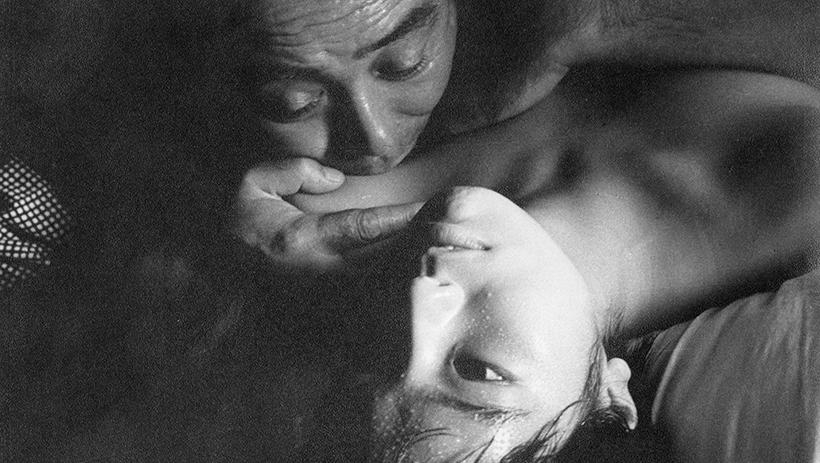
© Coll Positif
NEW RESTORATIONS
The Insect Woman
POSTED ON 12.10.2026
Born in the countryside in 1918, Tome has no choice but to turn to prostitution to survive…
Shohei Imamura’s The Insect Woman is as much a portrait of a woman as it is of a rural, post-war Japanese society rooted in ancestral, animist traditions. Choosing between exhausting work in the fields or mechanical repetitive labor in factories, Imamura serves up an unvarnished depiction of the fate of these girls, who have no protection. The interplay of bodies rivals that of the countless ways people scream; the humans mistreat one another on every level, every age. In this portrayal of a community we are forced to see only the truth, a dimension of powerful reality, a vicious life force, But it is life nevertheless, in all its baseness and its essence, without judgment or justice.
Actress Sachiko Hidari received the Silver Bear at the Berlinale for her truly outstanding performance. She is just as remarkable in the barns of the farm as she is in the city. She alone symbolizes a defeated Japan in the immediate aftermath of World War II; a Japan that walks with its head bowed, owns up to its failures and realizes that they are many just like her. In this labyrinth of so-called “impure” conduct, Imamura navigates with incredible narrative power. His framing is intrusive. With astonishing visual and auditory skill, he debunks the notion that national or personal shame can haunt the soul but never defeat the body. To him, the body is synonymous with life itself! The Insect Woman is a harrowing film in the most magnificent sense of the word!
Virginie Apiou